Thursday, February 16, 2017

What Is Courage

A friend sent me this award winning photo of a deer about to be eaten by two tigers. 


That set off a discussion between us.

She felt that the attribute shown by the deer was courage - to give up her life for her children... She must have had terrific courage to have taken that decision. My friend was not comfortable describing the act of the mom as a sacrifice.

I demurred. 

Courage is the raw material required to do (or not do) something. The act itself (what we do) could be called a sacrifice or a suicide or living. And as another friend explained, courage involves an act which is usually uncommon.

Some parents could bring themselves to try to straighten their child out who has a gay orientation no matter how painful it is to both parents and child. Some parents could be more accepting of their child's sexual orientation and face the social flak. Both these acts would probably need courage.

This could be extended to other examples. Do we walk out of a problematic / dull marriage as Mrs Kramer did or do we stay in it for the sake of society (and kids) as Francesca did? Both of them needed courage - one to act and the other to not act. What then is courage?

Courage is, perhaps, what is needed for us to take a decision (and act upon it) even if the act is to not run away as in the case of mom deer or Francesca - one might call such act a sacrifice - this act could cause a baggage and could lead to emotional manipulation - "look what I sacrificed for you". These people tend to carry guilt for their occasional pro-life acts which were in violation of their own principles.
On the other hand courage could also lead to the act of finding cheese elsewhere as Mrs Kramer did. The first kind follows a rule or a discipline. 
The 2nd kind chooses life. This leaves no baggage. These people, despite choosing life, tend to carry regret for pro-life acts that they wanted to do at times but didn't.

Pro death (the 1st kind) people see courage in suicide or sacrifice and in following principles. People who are pro life like to chase dreams and they like to see courage in that act. The question is not about who acts and who is passive. The question is about what our act is towards? Are we chasing a dream or sticking to principles? (I am assuming that the two are mutually exclusive). Of course Ayn Rand made it seem as though the two could and did coexist.

Incidentally society calls it a sacrifice which involves the courage of the pro-death kind.

Additional reading:
http://vbala99.blogspot.com/2015/06/difference-between-cameron-and-roark.html

Wednesday, February 15, 2017

Recipe Puli Milagai And Mola Mangai

The dishes here are good to have with curd rice.

Puli Molagai
Dry roast methi and solid hing and hand grind the same to a powder. Fry this in oil and also add lots of cut green chilies. Mix puli (imli/tamarind) in water. Heat puli in a container, add fried chilies, salt, haldi, fried hing and methi, fried mustard. Until it becomes thick.


Methi being roasted


Hing fried in oil


Mix methi and hing and powder it


Rock salt also added to methi, hing and powdered
Fry Cut Green Chilies


Heat Imli water until it shrinks


Add green chilies, powdered mixture and a little vellam (jaggery) shown above... The final puli milagai is a thick lliquid.


Mola Mangaai 
Same as puli Milagai except
  1. There is no heating involved
  2. Cut mango replaces tamarind (imli) and red chili powder replaces green chilies.
Cut Mango Pieces

Milaga Mangai stored in bootle


Additional reading:

Sunday, February 12, 2017

Recipe - Tarka, Aludam, Rajma, Ghooghni, Khichdi

Tarka, Aludam, Rajma, Ghooghni, Khichdi, Dal Makhni:
  • The base for all the 4 is the same. Cut onions, tomato, ginger, garlic. Add all this and red chilies and rock salt (I always use rock salt where there is some water) and grind. Then fry the mixture well. The base is ready.
Tarka: Soak pachai payar
Rajma: Soak rajma
Ghooghni: Soak white chana (aka white peas or vellai pattani) and 
Dal Makhni: Full black urad dal (soak overnight in water) 
In each case it should be soaked in water with some (rock) salt overnight and then boiled. In case of aludam, boil potato.
  • Finally add the boiled stuff to the fried and ground mixture. Add finely cut dhaniya leaves.
  • In case of khichdi, add the fried mixture to moong dal and then add dhaniya leaves and vegetables (potato, peas, carrot) and boil.
Ghooghni:


Make Thayir Chadam first: 


Boil rice. Sautee mustard, urad dal. Add green chilies (or as in this case I added red chili powder) and salt. Add butter milk or curd (yoghurt). And mix well. Curd rice goes well with any of tarka ghooghni etc. 


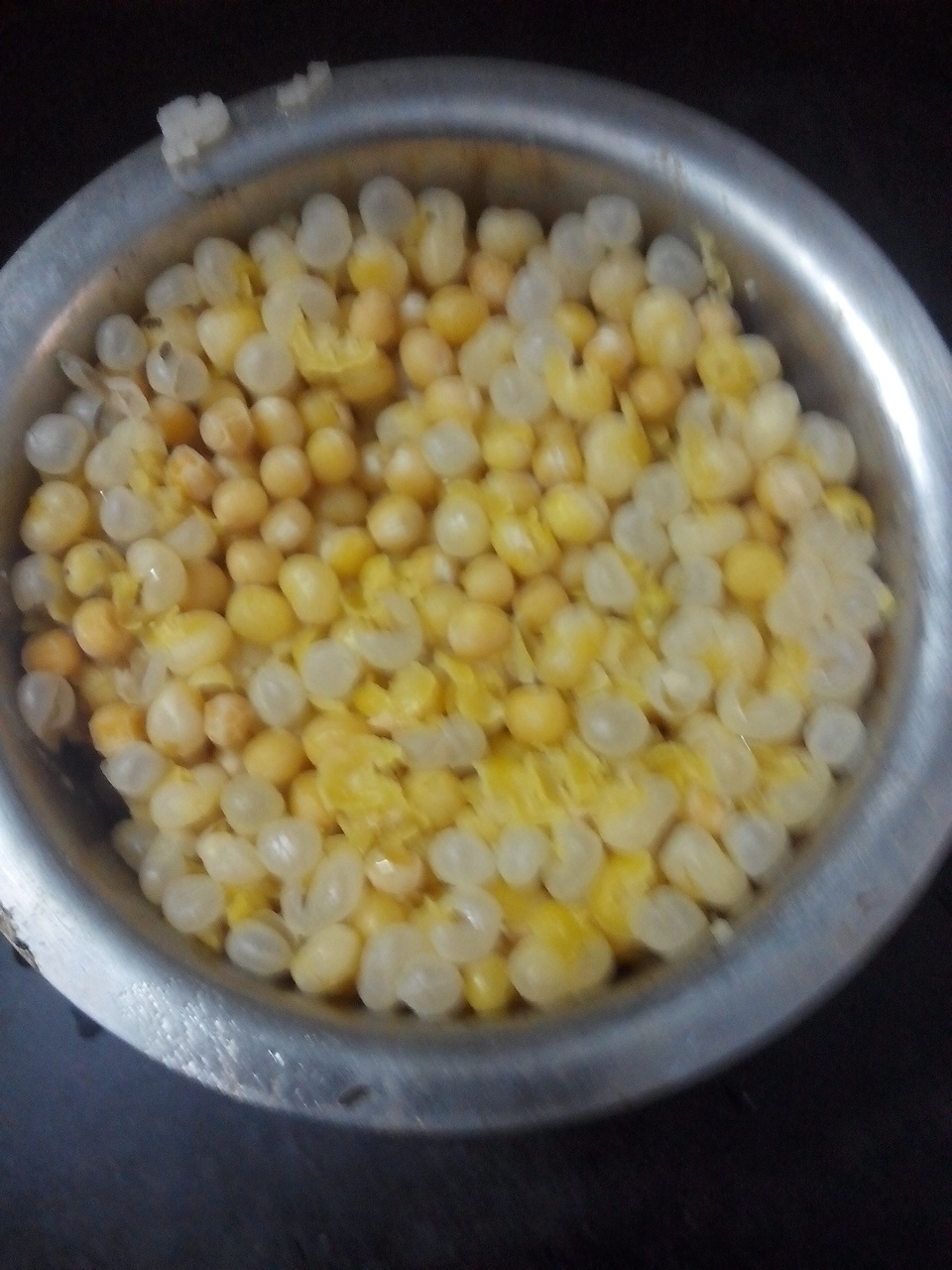
White peas (vellai pattani) being soaked overnight for ghooghni. Remember to add salt.


Boiled after being soaked. Now one part of the dish is ready. It needs to be mixed with the base and fried well. We have to make the base. Note that the base is same for all dishes.
Additional reading:
Khichdi across India: https://www.google.com/url?hl=en&q=http://google.com/newsstand/s/CBIw35mjsjk&source=gmail&ust=1486958969822000&usg=AFQjCNHAjkuxy3tJnTFGqYe0Tz_mFgIQ2Q


Grind red chilies, salt, tomatoes, onion pieces, dhaniya, jeera, ginger and garlic. Add Dhaniya leaves also


After grinding. - This is the base. This is the 2nd part of the dish (same for all dishes: Khichdi, Tarka, Aludam, Rajma)


Add slices of grated coconut. (only for Ghoooghni). Cut the slices into small cubes. Not needed for tarka, khichdi etc


Coconut slices added to ground base. Mix well

Mix the two parts. Boiled white peas and the ground base.


Top: Ghooghni AND Bottom: Ghoogni mixed with Curd rice


Dal Makhni: May need some more water.

Tuesday, February 7, 2017

Recipe - Aviyal

Cut vegetables into long thin slices. Vegetables used are chenai (yam), potato, eggplant, pumpkin, raw banana, carrot, drumstick, peas, cucumber. Boil them after adding salt. Drain off the water (retain it to add later). Wet Grind coconut, green chilies, jeera. Pour the ground mixture into the boiled vegetables. Add a little curd, curry leaves, few teaspoons of coconut oil. Sautee mustard, urad dal in coconut oil. Add some of the drained off water, if needed, to get right consistency.
A little spinach is also added

Vegetables cut - see the size and shape
Avial.

Saturday, February 4, 2017

Understanding Love

I was explaining this concept to my friend. Things are often not what they seem to be.

When someone says "I love you/him/her/it,,, etc" it is time to decipher the meaning correctly.

The love could be of two kinds.
  1. Like the love a woman has for her child. Most mothers would give her life for their children. This is the giving kind of love.
  2. Like the love a woman has for dark chocolate. She would like to take a huge bite and gulp it down, destroy it and then let out a contented burrrrp. I call this the love of consuming or destroying.
Unfortunately the English language doesn't differentiate between the two kinds. One has to exercise caution when one hears a partner claim that they love them. What does the partner think of you as? Child or chocolate? 

A similar miscommunication happens when someone claims that (s)he is not choosy and that (s)he wears / eats whatever her mother/husband gives her. Here again there could be two meaning:
  1. The person is truly not choosy. She might eat / wear whatever other people give her without complaining. Truly catholic in taste.
  2. The person is very choosy. Except that her husband / mother knows what she likes and gives her only those stuff, so she doesn't have to reject anything they give. 
You can see that the two are completely different. So again be careful how you interpret when someone says they eat / wear whatever some X person gives them.

A third example is your partner claiming to have good taste because he chose you. Oh oh...Heads you lose, tails he wins.

Inner Child And Healing

Why is the child taking over and forcing a sub-optimal response? What is the child afraid of? 

It seems as though the child is hurt horribly and is terribly scared and scarred. 

What are the things that make the child overtake you and scream?

Is the child afraid that:
  • what someone is saying is very hurting?
  • what someone is planning to do is going to hurt deeply AGAIN? is it a preemptive strike? It reminds the child of things that the same person / other persons did earlier which hurt very badly?
Maybe the child has taken "abuse", the emotions from which were never released, vented, talked about. And one fine day. when the "abuse" happens again - it's the last straw. And a seemingly small incident creates a disproportionate response.

Types of hurt:
  • being left alone to fend without the wherewithal to handle - a scene perhaps experienced often in childhood - maybe the parents were absent or unable to protect the child.
  • being insulted again.
  • being minimized or ignored - people are saying or implying that what the child feels is not valid. That the child is making a mountain out of a molehill.


A friend sent me this book yesterday, 3rd Feb 2017: Inner Bonding: Love and approval addiction. Very interesting. Why does the child look at someone else for approval? Perhaps from the early stages the child was "terrorized" into behaving. The author suggests that the "adult" could decide to give the child unconditional love. And that that will solve the problem. But then the adult is not "empowered" to provide unconditional love since the child was never given it in the first place. The "corrupted" or wounded child grows up into a wounded adult. Can a wounded adult heal the wounded child?


Additional reading:
  1. Lack of Emotional Intelligence https://www.forbes.com/sites/amymorin/2017/03/25/10-ways-you-could-be-giving-away-your-power-without-even-realizing-it/#167df8d96123
  2. https://drkeithwitt.com/positive-power-shadow/
  3. Stronger sense of self: http://greatergood.berkeley.edu/article/item/do_mindful_people_have_a_stronger_sense_of_self?utm_source=Greater+Good+Science+Center&utm_campaign=d11014e4ba-GG_EMAIL_CAMPAIGN_2017_03_15&utm_medium=email&utm_term=0_5ae73e326e-d11014e4ba-51673647
  4. Cultivate a secure atttachmenthttp://greatergood.berkeley.edu/article/item/how_to_cultivate_a_secure_attachment_with_your_child?utm_source=GG+Newsletter+Feb+8%2C+2017&utm_campaign=GG+Newsletter+Feb+8+2017&utm_medium=email
  5. http://vbala99.blogspot.com/2016/02/i-me-and-myself-and-my-inner-child.html
  6. http://www.inc.com/lolly-daskal/18-effective-habits-of-highly-successful-people.html For Success!

Friday, February 3, 2017

Recipe - Keerai (Spinach) Masiyal

Keerai (Spinach) Masiyal:
Take paalak keerai. Remove the stem. If the stem seems big and thick, cut it out and use the stem to make palak koottu. Use only the leaves for masiyal. (See picture below for masiyal consistency. If the stem is used in masiyal, the consistency could resemble horse dung. The taste also..) Finely cut keerai stem can be used for keerai kottu but not to be used for masiyal. Boil the keerai, add solid hing and fried jeera, add red chili powder. Drain off the water (use the hot water for rasam, kozhambu etc). Mash the keerai fine with a mathu.
Add friend mustard, hing powder. 


Keerai Masiyal

Recipe - Rava Upma And Coconut (Thengai) Chutney

Rava Upma:
Take ladleful of rava and roast the same.
Sautee mustard, urad dal, chana dal. Add this to the roast rava. Add curry leaves and dhaniya leaves. Add butter or ghee.

Boil 20 ladleful of water. Add cut potatoes, carrot, tomato, peas and salt into the water. Add cut ginger and green chilies. Let it boil sufficiently. Filter the water and  add the solids to the roast rava. 

Finally the most important step - add water to the rava and keep stirring well. 

Rava packet, frozen cut onions to be fried, peas and tomato on the left, Other vegetables and green chili to the right. And a peeler for potatoes and ginger.
Coconut Chutney
Grind grated coconut, imli, green chilies, salt. Add dhaniya leaves at the end. I ground dhaniya leaves while grinding. So it turned out green. See picture below.
Upma in the casserole and coconut chutney (green because of dhaniya leaves).


Recipe - Paruppu Usili And Paruppu Urundai Kozhambu (PUK) And Other Tamil Dishes

Paruppu Usili
  1. Soak Paruppu (Thoram Paruppu: Kadalai Paruppu in 4:1) in water for 3 hrs. After soaking, remove water, add salt, red chili, hing, grind.
  2. Then steam / boil the ground dal (in pressure cooker with the weight on top or cook it in a small vessel which is an island inside a larger vessel!! The way one would cook rice without pressure cooker. Oil the insides of the smaller vessel before steaming) Then grate. Grating cannot be done if the boiled dal is too soft and hard. In which case just stir vigorously while frying in oil. Steaming step is optional. One can directly fry the ground dal - more oil will be consumed in that case. Soaking and grinding makes the dal like coconut. And hence the dish looks like Vazhakkai Podi
Beans And Soaked (overnight) Tuvar dal and Chana dal

Ground dal (after removing all water) with hing, red chili,salt.About to be steamed.

Boiled Beans with salt water

Dal after steaming. It should be fluffy not hard

Fry ground dal in oil

After frying

Finally mix dal with beans. 


Paruppu Urundai Kozhambu
  1. The base for the balls is same as for paruppu usili (in usili the ground dal will be subsequently steamed/fried and mixed with beans/avarakkai). This is same as the 1st step for Paruppu Usili. Remember the dal balls have to be tasty by themselves. Then add coconut. Do not grind coconut. (Coconut is optional). Beat the ground dal for 10 mins until it becomes fluffy.
  2. The ground dal has to be mixed with til oil and then the balls have to be made. The balls are then dropped one by one into sambar. Keep stirring. Be very careful not to "disintegrate" the balls in sambar while stirring. Steaming is not needed here because the balls are boiled in sambar unlike in usili. This is almost same as sambar except no boiled tuvar dal is added. The dal balls are added. The balls play the role of "thaan" (pumpkin / potato / ladies finger / brinjal) in sambar.
Tuvar dal and Chana dal soaked in water (+salt) overnight

Base for PUK (Paruppu Urundai Kozhambu) - same as in sambar, Except no dal

Filter out water from soaked dal (add the water into sambar base or rasam or throw it out), add red chilies, salt, hing and grind well. Make sure all water is removed before grinding.
Make balls out of the ground dal

Drop the one by one into the PUK base. Be careful  so the balls don't break.


Boil the dal so the urundai solidifies. Poke ball with a knife and if no dal sticks to knife its fine.

Lemon Rasam


Potato (also raw banana) Podimas:
Urulaikizhangu (vazhakkai) Podimas: Cut green chilies, ginger add curry leaves, Chana dal, urad dal, red chili, mustard and fry the same. Mix with boiled, mashed potato. Boiled potato can be replaced with boiled (and peeled) raw banana to make a nice side dish. Squeeze half a lemon

Pattani Chaadam (Peas Rice / Pulao)

Roast a little grated coconut and then add Dhaniya, Chana Dal + urad dal, Red chili, hing, salt. You can add green chili and jeera also while frying (and subsequently grind). Grind the roasted stuff. Break raw Cashew nut into smaller pieces. Fry it in refined oil. Mix the ground powder, rice, ghee dhaniya leaves, fried cashewnuts. (Good idea to add boiled peas also). Add tadka.
Chana and urad dals, jeera, dhaniya, red chili and coconut
Frozen peas below for peas rice. Rice used 1cup (about 150ml)


Pattani chaadam


    Vazhakkai Podi:

    1. Boil Raw banana in a pressure cooker (if you are boiling rice, you can cook raw banana along with it). Then grate boiled raw banana and coconut.
    2. Fry all dal, hing, red chili and salt. Then grind this. Mix grated raw banana with grated coconut. Mix grated stuff and ground stuff.  All dal means tuvar, chana, urad. Add tadka. White powder in the cup below is ground dal (all 3).


    Tomato Kozhambu
    1. Boil cut tomato (Retain the hot water). Boil dal (tuvar dal or moong dal) Take the tomatoes out, cool them in cold water and peel the skin and mash the peeled tomato well.  Put the mashed tomato back into the boiled water. Add salt and haldi powder.
    2. Add roasted and ground mixture of red chili, dhaniya, methi, jeera, hing and pepper
    3. Add the ground mixture in water and let it boil for some time. Sautee mustard and green chili. Then add dhaniya leaves. Difference from sambar: no sambar powder but roast and ground dhaniya, jeera, pepper (no imli because of tomato). Almost same stuff to be ground as Pattani chadam, methi also needed in addition.


    Mor Kozhambu

    Wet grind Grated coconut, green chilies, rice, salt, then mix with buttermilk (on the side) and heat less than 5 mins.. Add fried red chilies, mustard, methi.


    Varuththu Araicha Mor Kozhambu (VAMK): Add longitudinally cut eggplant, potato. Fry and then grind urad dal, red chili, rice, methi then grind with coconut. Add this and cut vegetables to boiling water (no imli, no hing), add salt and buttermilk. (Imli can be added instead of buttermilk.) Eruvali kozhambu: Same as VAMK except use chana dal instead of urad dal.


    Aviyal:


    Coconut Rice and Lemon Rice - Usually made on Kanu (Day after pongal and for Adi Perukku); 
    Seasoning for both: Mustard, red chili, green chili, curry leaves in til oil for all rice. 
    In addition: Lemon rice: Chana dal seasoning. Lemon rice: Mix lemon juice, haldi, salt. Then add seasoning with rice to make lemon rice.  
    Coconut rice: Urad dal, grated coconut, cashew nuts, coconut must each be fried separately (and then added with seasoning and rice). Coconut must be roasted until it becomes red.  Add salt. Mix with rice. 
    Tomato rice: Cut tomato into small pieces. Sautee Mustard, jeera, chana dal, curry leaves, onion. Add sambar powder (and garam masala powder or my suggestion: garlic and ginger paste). Add cut tomato, salt. Mix this with rice. Add curry and dhaniya leaves.


    Tarka, Ghooghni, Aludam, Khichdi, Dal Makhni:


      Lemon pickle:

      1. Cut lemon (remove the seeds) and mix with salt and haldi for a couple of days
      2. Roast methi then powder
      3. Fry solid hing then powder (or use hing powder)
      4. Add Red chili powder (1:1.25 by volume of lemon: chili powder), methi and hing powders from above.
      5. Heat oil, fry mustard seeds, add above ingredients
      6. Only til oil to be used for all pickles


      Inji Jeeram

      Peel ginger, add jeera, methi, dhaniya. Grind this mixture and then add jaggery and grind. Take the ground stuff and stir in ghee. This is good for indigestion. This is to be eaten like a medicine 1-2 tsp.


      Stir Until Very Thick


      Inji Char:
      Optionally inji, jeeram, pepper, haldi can be wet ground adding sufficient amount of hot water. Then squeeze the ground ingredients and retain the liquid (throw away the solids). Add sugar and squeeze lemon.

      Kozhukkattai:

      Grate coconut. Make paagu by adding a little water to jaggery. Filter it and remove the solids (dust, stone etc). Heat the liquid, then add grated coconut and keep stirring. It will become sticky after it dries. Add elaichi powder. This is the poornam.

      Soak raw rice in water for an hour. Remove the water, and powder the rice fine (not coarse) in mixie. Boil water (the volume of water  to be same as volume of rice powder), add til oil, a little salt and switch off the stove. Then slowly add rice powder and keep stirring and make it homogeneous until it become like roti dough. Then use til oil to ensure the dough doesn't stick.. And then make a choppu (semicircular) shape and then fill the poornam and close the choppu. Make a few such. Then steam the batch for 5-8 minutes. Kozhakkattai ready. You may have to steam them in batches depending on the quantity you plan to make.


      Note that fried dal mixture, red chilli, hing, coconut are used in VAMK (varuthu araicha mor kozhambu), coconut rice, vazhakkai podi and vaazhakkai koottu.


        A friend sent me this: use at your peril -https://drive.google.com/file/d/0B1xQDlpMnLKxd0RqMnhzRzBuTzg/view?usp=sharing


        Popular Posts

        Featured Post

        Can't You Take A Few More Steps

        Recently a friend of mine asked his sister whether she couldn't take a few steps to help him out. It happens that she had done plenty fo...