Friday, November 30, 2018

Puzzle - Guess The Word

A friend of mine sent me this puzzle.


  1. It is a 9 letter word: 123456789
  2. If you have 234 then can 1234
  3. 56 is one type of disease
  4. 89 indicates exact location and time
  5. 2 and 7 are same letter
  6. 3 and 8 are same letter
  7. 5 and 9 are same letter
Guest the word.


Wednesday, November 21, 2018

Maturity 101

A friend asked me what exactly the term maturity meant.

Here is my definition:
Maturity is about knowing what to say and what not to say based on what the situation demands.
It usually would involve avoiding truth and would involve better survival.

It has nothing to do with intelligence. It correlates more with EQ and with IPR (Interpersonal relationship)

Women are much more mature than men.

It may not have much to do with being responsible. A mature person may or may not be responsible. Same way, an intelligent person may or may not be mature.

Maturity correlates (negatively) with Innocence.

Tuesday, November 20, 2018

Financial Investment - 101 - TEQPS, ROE Etc

While trying to understand some fundamentals concepts such as TEQPS (Total Equity Per Share), Book Value (BV) I got to read the following articles. I still don't understand why TEQPS and BV, which are supposedly the same, have different values for companies. Anyway...

TEQPS 

"When there are no preferred shares, the equity per share is simply the shareholders’ equity divided by the number of common shares issued and outstanding."


What is shareholders equity?
"Shareholders equity is the difference between total assets and total liabilities. It is also the Share capital retained in the company in addition to the retained earnings minus the treasury shares. ... Shareholders equity is also called Share Capital, Stockholder's Equity or Net worth."


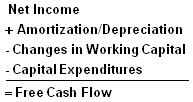
Difference between net income and cash flow

https://i.investopedia.com/inv/articles/site/fcf.gif (from https://www.investopedia.com/university/fundamentalanalysis/fundanalysis8.asp)

From Investopedia:

Cash conversion cycle (CCC)
Calculated in days, the CCC reflects the time required to collect on sales and the time it takes to turn over inventory. The shorter this cycle is, the better. Cash is king, and smart managers know that fast-moving working capital is more profitable than tying up unproductive working capital in assets.

CCC = DIO + DSO – DPO

DIO - Days Inventory Outstanding
DSO - Days Sales Outstanding
DPO - Days Payable Outstanding
And
The fixed asset turnover ratio is calculated as:
Average fixed assets can be calculated by dividing the year-end PP&E of two fiscal periods (ex. 2004 and 2005 PP&E divided by two).
And
ROA (Return of Assets) = (Net Income)/ (Average Assets)

Where Average total assets can be calculated by dividing the year-end total assets of two fiscal periods (ex 2004 and 2005 PP&E divided by 2).


  1. http://awgmain.morningstar.com/webhelp/glossary_definitions/stocks/Total_Equity_Quarter_1.html
  2. https://www.investopedia.com/ask/answers/042015/why-would-company-buyback-its-own-shares.asp
  3. https://www.investopedia.com/articles/02/041702.asp
  4. https://www.investopedia.com/articles/stocks/10/share-buybacks.asp
  5. https://www.investopedia.com/articles/fundamental-analysis/08/buybacks-vs-book-value.asp
  6. https://en.wikipedia.org/wiki/Share_repurchase
  7. https://www.forbes.com/sites/investor/2018/11/19/the-deeper-lesson-from-berkshire-hathaways-share-buyback/
  8. https://www.investopedia.com/articles/fundamental/03/100103.asphttps://www.investopedia.com/articles/04/031004.asp
  9. https://www.investopedia.com/articles/04/022504.asp
  10. https://www.investopedia.com/articles/basics/05/062405.asp (fraudulent practices in CF accounting)
  11. https://www.investopedia.com/university/financialstatements/financialstatements2.asp
  12. https://www.investopedia.com/university/financialstatements/financialstatements5.asp: (Revenue Recognition Issues: Very nice). (1) Net sales (2) Plus the decrease in accounts receivable (or minus the increase) (3) Plus the increase in cash advances from customers (or minus the decrease) = Cash received from customers
  13. https://www.mckinsey.com/business-functions/strategy-and-corporate-finance/our-insights/the-value-of-share-buybacks
  14. https://zerodha.com/varsity/chapter/five-corporate-actions-and-its-impact-on-stock-prices/
  15. http://theconversation.com/explainer-are-share-buybacks-good-for-investors-19686
  16. https://dollarsandsense.sg/share-buybacks-what-it-means-and-how-it-impacts-investors/
  17. https://www.thehindubusinessline.com/markets/why-firms-opt-to-buy-back-shares-than-pay-dividend/article25691611.ece/amp/

Wednesday, November 14, 2018

Recruitment Lesson 101

My first attempt at fiction:

Imagine you are 27 years old. And your fiance ditched you. You are distraught. You don't have much of an academic background. You don't know what to do professionally. Nor do you want to get married again. 

A kind gentleman in his 50s approaches you and explains that you currently have nothing to look forward to. He gives you a proposal. How about joining in his mission to create the best educational institution. You don't have anything else on your plate. What the man said was enthralling. What choices did you have anyway? So you hooked up with him and started a school. 

Years have passed.

You now have a purpose in life and you feel fulfilled.

What did the man get from you? An energetic, passionate dog, loyal for life. You would think nothing of perjuring for his sake. (How the cartoon would love such recruits!! Instead he has Rod Rosenstein, Michael Cohen.)

Win win for both, no?

Like a friend used to tell me, you should recruit for attitude, train for skills. Occasionally the lack of deep talent would result in gaffs. But attitude trumps talent. 

Corollary:
If you are a passionate and loyal person, identify an Enneagram 8 to hitch your wagon to, even if you are kinda short on the talent department.

Additional reading
  1. https://vbala99.blogspot.com/2018/11/when-perjury-is-essential-facts-of-life.html
  2. Help! My Boss Is El Chapo: Help! My Boss Is El Chapo https://www.wsj.com/articles/help-my-boss-is-el-chapo-11547269215

When Perjury Is Essential - Facts Of Life

A friend of mine X told me that another friend Y committed perjury in front of a bunch of people. The perjury related to X's character. An elderly gentleman Z insinuated that my friend X had done something borderline unethical. Y, who is very close to Z and who knew exactly what X did, chose to keep quiet in the group meeting and let the insinuation hang. Y committed perjury by omission. Matter of fact whatever X did was on the specific request of Y.

Y and Z are the senior members of the group to whom everyone else reports in.

My friend X was aghast. She spoke with Y. Then X recounted her conversation with Y.
I [X] asked her whether it waa wrong to be honest or sincere. She [Y] laughed at me and said, "this is why I like you. It's not. But at times you should know when to lie also" (Y  thus acknowledged the perjury indirectly).
Y went on to tell X lovingly that X didn't understand her, Y, at all. 

Very touching. In the whole business, X's reputation has been tarnished. But then it was done in the larger interest. Whose interest? 

X didn't understand that her reputation had to be tarnished for the greater good of the institution and didn't willingly accept to be sacrificed. So naive of X. Sure X didn't understand Y at all.

Yatha Raja, Thatha Praja - As the king (Z) is, so are his subjects (Y).

It's interesting to note that Y and Z are in the business of imparting integrity and ethics among other things to hundreds of souls.

It's a good thing X, my friend, is female and Z is male. Had the genders been the other way around, Z could have accused X of molesting. Of course, for the greater good only. 

The end justifies the means, no?

Additional reading:
  1. https://vbala99.blogspot.com/2018/03/different-points-of-view.html
  2. https://vbala99.blogspot.com/2018/10/worst-botchup-ever.html

Maths And Puzzles: What Is She?

I was talking to a friend of mine who is a  doctor. She is in love with a married man who is 10 years older and staying in a town 2000km away. He is married with a kid. (She is single.)
And the man had asked her to move to his town.

She was confused, whether she could move, whether her relationship was strong enough etc.

I asked her whether the man planned to divorce his wife. She said he wouldn't because of the kid. I asked her to look at the bottomline. She replied she didn't know what the bottomline was.

I asked her whether things would be fine if he moved to where she was. She said things would probably not be fine. And anyway his family wouldn't want to move and he has a stable job.

I wished her all the best.

The puzzle question is: What (kind of person) is she?

Tuesday, October 30, 2018

Emotions 102

I had earlier written a 101 post (https://vbala99.blogspot.com/2018/10/emotions-101.html) with mostly reading material and some quotes from those.
Recently, I came across a nice link: http://yourbrainhealth.com.au/brain-process-emotions/
What follows is my understanding from the link - it took some time for me to process the information in the article.

The Limbic system in the brain consists of Hippocampus, Hypothalamus, Amygdala (and other structures):
  • Brain receives sensory information through chemicals such as serotonin, dopomine, acting as neuro transmitters and thus recognizes objects and situations.
  • The Hypothalamus:
  • Controls the hormones that adjust or create our mood. 
  • Manages our biological processes, sweating, pulse rate etc, "in line with our mood".
  • Amygdala "assigns an emotional value to the situation" based on previous steps. Meaning the emotions are a result of both sensory information and our physiological changes (does this agree with 2 Factor theory?)
  • The hippocampus then indicates "which courses of action are congruent with our mood and makes split-second risk/reward assessments" = S1 (For an intro into S1, S2 read https://vbala99.blogspot.com/2017/10/thinking-fast-and-slow-daniel-kahnemann.html). I assume the hippocampus also triggers the S2 as and when required.
There are newer networks that control our mood. Apparently Limpic system is an older network evolutionarily. Some scientists, as per wiki, believe that the concept of limpic system is obsolete and is out of sync with the current understanding of the brain.
The autographic network deals with memories and reflection. The cognitive control network  (CCN) controls coordination of activities, thoughts etc to get a task completed. Either the autographic network (AN) or the CCN is in the foreground at any instance. I would say AN is related to S1 and CCN to S2. 

Apparently issues in AN, CCN create mood related disorders.

Wednesday, October 24, 2018

Worst Botchup Ever - The Best


I am reminded of what a friend once said of her 12 year old daughter. She had been caught stealing a pencil in school. My friend said that she would have been proud of her (daughter)  had she done it smartly and not got caught. But she was so silly, she got caught. My friend was very annoyed with her.

What the cartoon finds reprehensible is not the macabre act but the silly way it's being covered up by KSA.

Enneagram 8?


Additional Reading:

  1. https://vbala99.blogspot.com/2018/10/the-other-saman.html
  2. https://www.washingtonpost.com/outlook/2019/02/22/essential-cons-that-define-trumps-success/ Excellent summary of Trump
  3. https://www.washingtonpost.com/outlook/yes-trump-is-undignified-demagogues-have-to-be/2019/03/08/bd8d8d9c-4109-11e9-a0d3-1210e58a94cf_story.html Nice one
  4. How Donald Trump inflated his net worth to lenders and investors - Don't trust my statement. It doesn't give the full picture
  5. Trump administration authorized nuclear energy companies to share technological information with Saudi Arabia: Both Trump and Sudi have huge drives and minimal ethics. Great bed partners
  6. U.S. Role in Yemen War Will End Unless Trump Issues Second Veto
  7. National Enquirer Put Up for Sale: Trump trying to "Catch And Kill" associates who ate too risky and thus creates more distance between him and outfits that have been too "dirty"? This will be a great thing to buy for Bezos.
  8. Federal judge likens Trump’s attacks on judiciary to KKK https://www.washingtonpost.com/politics/2019/04/13/you-can-hear-klans-lawyers-federal-judge-likens-trumps-attacks-judiciary-kkk/
  9. How Trump Lost Half of Washington
  10. Decade in the Red: Trump Tax Figures Show Over $1 Billion in Losses
  11. https://www.forbes.com/sites/danalexander/2019/05/08/why-we-took-trump-off-the-forbes-400-during-his-decade-of-tax-losses/
  12. Confidential draft IRS memo says tax returns must be given to Congress unless president invokes executive privilege
  13. Second Federal Judge Rules Trump Can’t Block Subpoenas of Financial Documents https://www.wsj.com/articles/second-federal-judge-rules-trump-cant-block-subpoenas-of-financial-documents-11558559850

Sunday, October 21, 2018

#SheToo

Imagine if there was a movement (by men) which objected to being bombarded by feminine behavior - showing skin, fluttering eyelashes, SASC (Shaking a** and Showing Cleavage), rolling eyes, expecting that her emotions be given due consideration, crying at work place in front of a man, expectating that men exhibit gentlemanly behavior, protect them, pay for their things, dinner etc.

Imagine further that this movement became big. And that men came out of their cupboards and started to accuse women - van driver or physical education teacher accuses school principal, Lab technician accuses Gynaecologist - "oh yes she too did it to me".

And imagine the school principal or the hospital gynaecologist is fired because a Tom, Dick and maybe Harry too came out and chose to be brave and complain against the horrible women. And these victimized men also say that they insisted that their house have another fire escape because of the terror that they feel when confronted with feminine behavior.

And in a Pristine Blatantly Fraudulent childlike voice they say that they avoid singles bars and they visit those only when needed professionally, maybe as a bartender or a bouncer.

And when further queried as to what he remember of the woman, the man replies in  a quivering voice "she was crying" or "her top blouse button was open". Imagine peeking at cleavage while retaining the right to complain of harrassment by its owner for enabling a man to peek.

Oh my.

Note:
Any resemblance to the testimony by Blasey Ford is purely coincidental. 
(https://vbala99.blogspot.com/2018/09/christene-blasey-ford-and-brett.html)

Emotions 101

This is about my quest towards getting a deeper understanding of emotions. I jotted down a few questions. And then the rest of the post consists of quotes, without permission, from links that I liked.

My understanding that emotion skews perception of reality. How does it happen? 

Emotions stand for Robin Hood / communist behavior. How does the mind make peace with such "unfairness". Kadai thengai (eduthu vazhi Pilaaiyarukku odaikkardhu) and Rob Peter (to pay Paul).

An emotional person looks at a logical person as so inhuman. How exactly does an emotional person see the other kind?

What creates emotions? I have started to consider the possibility that emotions can be controlled and steered.

Behavior regulation can happen only though an understanding of emotions. Thought, without emotions, cannot regulate behavior.

Now to the reading material. I found each of these links to be interesting. I learned new stuff.

https://www.verywellmind.com/theories-of-emotion-2795717:
In psychology, emotion is often defined as a complex state of feeling that results in physical and psychological changes that influence thought and behavior. 

https://en.m.wikipedia.org/wiki/Emotion_perception: "While the visual system is the means by which emotional information is gathered, it is the cognitive interpretation and evaluation of this information that assigns it emotional value, garners the appropriate cognitive resources, and then initiates a physiological response. This process is by no means exclusive to visual perception and in fact may overlap considerably with other modes of perception, suggesting an emotional sensory system comprising multiple perceptual processes all of which are processed through similar channels."

https://en.wikipedia.org/wiki/Somatic_marker_hypothesis: 
"When individuals make decisions, they must assess the incentive value of the choices available to them, using cognitive and emotional processes. When the individuals face complex and conflicting choices, they may be unable to decide using only cognitive processes, which may become overloaded. Emotions, consequently, are hypothesized to guide decision-making.

Emotions, as defined by Damasio, are changes in both body and brain states in response to stimuli. Physiological changes (such as muscle tone, heart rate, endocrine activity, posture, facial expression, and so forth) occur in the body and are relayed to the brain where they are transformed into an emotion that tells the individual something about the stimulus that they have encountered. Over time, emotions and their corresponding bodily changes, which are called "somatic markers", become associated with particular situations and their past outcomes.

When making subsequent decisions, these somatic markers and their evoked emotions are consciously or unconsciously associated with their past outcomes, and influence decision-making in favor of some behaviors instead of others."

https://www.sciencedirect.com/topics/neuroscience/somatic-marker-hypothesis: Exceptionally fascinating article:
"The interaction between emotion and cognition takes center stage in the work of Damasio whose “Somatic Marker Hypothesis” has been among the most influential theories of emotion in recent years. According to Damasio (1994, 1999), somatic markers are emotional reactions with a strong somatic component that support decision making, including rational decision making. These reactions are based upon the individual’s previous experiences with similar situations. Somatic markers permit a comparatively fast preselection of the relevant alternatives which are then subjected to a more detailed cognitive processing for the final decision. In doing so, somatic makers increase the efficiency and accuracy of human decision making. Following Damasio, decision making would be almost impossible if detailed cognitive processing of all the available alternatives were necessary.
Damasio refers to several case studies and experiments that seem to show that the inability to experience emotions results in a severe impairment of rational decision-making. In an experiment conducted by Bechara et al. (1997), healthy controls and patients with emotional deficits had to perform a gambling task which required a rational decision for the most advantageous strategy in order to gain as much money as possible. The controls started with an emotional reaction, then they adopted the advantageous strategy before they were finally able to tell what the advantageous strategy was, a few trials later. Patients, by contrast, showed no emotional reaction and continued to use the disadvantageous strategy throughout the experiment, although they also realized what the advantageous strategy was. The experiments support the basic idea underlying the somatic marker hypothesis, namely that rational decision making requires emotional reactions. 
Note that these experiments seem to indicate also that, in contrast to the hypothesis of Oatley & Johnson-Laird (1987), emotional reaction is an ongoing process that does not require unexpected events or specific junctions in the proceeding of our plans. Second, in order to perform the function described, emotions have to be very specific, and third, they have to acquire this specificity independently from cognitive processes: In the above experiment, the cognitive assessment follows only a while after the emotional reaction has set in.
The Somatic Marker HypothesisThe findings reviewed here, and other related observations, have led to the development of a framework that is termed the somatic marker hypothesis. In a nutshell, the theory posits that feelings and emotions give rise to “somatic markers,” which serve as guideposts that help steer behavior in an advantageous direction. Deprived of these somatic markers, VM patients lose the ability to experience appropriate emotional responses to various stimuli and events. We have proposed that the absence of these emotional responses – evidenced, for example, by the missing SCRs in the experiments described above – leads to defective planning and decision-making; this, in turn, leads to socially inept and inappropriate behavior that is characteristic of VM patients. 
Emotional neuroscience and psychophysiological research now challenges the view that rational choice and emotional processing are unrelated or opposed, with evidence for potential beneficial effects of emotion responses on decision making.
Changing moods influence the cognitive weighting of decision parameters, with low mood (and implicitly low autonomic reactivity) linked to a preference for low-risk, low-reward outcomes (Smith and Ellsworth, 1985), while anxiety (typically engendering heightened sympathetic tone) leads to a heightened intolerance of uncertainty (Stern et al., 2009). Together these studies illustrate the integration of autonomic control with cognitive processes underlying decision making. [[Low risk, low reward and heightened intolerance of uncertainty are both same, no? Yet WHILE is used.]]
Given the role of incentive learning in the encoding of reward, it is interesting to consider how the value conferred by this process is retrieved to determine choice performance. Because the choice tests are often conducted many days after incentive learning, in extinction the rat is forced to rely on their memory of specific action–outcome associations and the current relative value of the instrumental outcomes. So how is value encoded for retrieval during this test?
A currently influential theory, the somatic marker hypothesis (Damasio, 1994), proposes that value is retrieved through the operation of the same processes through which it was encoded. According to this view, decisions based on the value of specific goals are determined by reexperiencing the emotional effects associated with contact with that goal. With regard to outcome devaluation effects, for example, the theory could not be more explicit:

When a bad outcome connected with a given response option comes to mind, however fleetingly, you experience an unpleasant gut feeling … that forces attention on the negative outcome to which the given action may lead, and functions as an automated alarm signal which says: Beware of danger ahead if you choose the option that leads to this outcome. The signal may lead you to reject, immediately, the negative course of action and thus make you choose between other alternatives.
An alternative theory proposes that reward values, once determined through incentive learning, are encoded abstractly (e.g., X is good or Y is bad and so on) and, as such, from this perspective they are not dependent on the original emotional effects induced by contact with the goal during the encoding of incentive value for their retrieval (see Balleine and Dickinson, 1998a; Balleine, 2005, for further discussion).
We have conducted several distinct series of experiments to test these two hypotheses and, in all of these, the data suggest that after incentive learning, incentive values are encoded abstractly and do not involve the original emotional processes that established those values during their retrieval. [Huh?? Somatic is wrong? Emotions not involved? Just plain memory is it?]] By S.B. Ostlund, ... B.W. Balleine, in Learning and Memory: A Comprehensive Reference, 2008


https://silvialisam.com/data-visualization-people-remember-the-feeling-not-the-numbers-db0018dc9998: 
"Source and Perception: If the visualization comes from someone’s trusted media, they are more likely to believe in it. 
People remember the gist, message, and the feeling, not the numbers."


Additional Reading:
  1. https://www.psychologytoday.com/us/blog/theory-knowledge/201701/understanding-emotions-and-how-process-them
  2. https://www.psychologytoday.com/us/blog/theory-knowledge/201701/the-concept-concept-creep
  3. https://www.psychologytoday.com/us/blog/theory-knowledge/201505/finding-your-emotional-sweet-spot
  4. https://www.psychologytoday.com/us/blog/theory-knowledge/201402/are-you-depressed-you-want-be
  5. http://psychology.wikia.com/wiki/Emotional_control: 'Emotional control (or Emotional self-regulation , or emotional regulation or regulation of emotion) is the ability to respond to the ongoing demands of experience with the range of emotions in a manner that is socially tolerable and sufficiently flexible to permit spontaneous reactions as well as the ability to delay spontaneous reactions as needed. Functionally, emotional regulation can also refer to processes such as the tendency to focus one's attention to a task and the ability to suppress inappropriate behavior under instruction. Individuals who are emotionally dysregulated exhibit patterns of responding in which there is a mismatch between their goals, responses, and/or modes of expression, and the demands of the social environment."
  6. https://www.powerofpositivity.com/research-reveals-can-control-emotions/
  7. http://analogcounseling.com/therapy-blog/the-nine-causes-of-emotion
  8. https://www.scientificamerican.com/article/can-we-control-our-thoughts/
  9. http://analogcounseling.com/therapy-blog/why-do-i-do-what-i-do-attachment-styles-explained
  10. http://sourcesofinsight.com/your-thoughts-create-your-feelings/
  11. https://www.quora.com/Do-thoughts-control-feelings-or-do-feelings-control-thoughts
  12. www.psychologytoday.com/us/blog/the-minute-therapist/201512/feeling-your-thoughts%3famp

Popular Posts

Featured Post

Oh, I Think I Was Raped

We have been hearing about the Cornell (University) 7 - the frat boys who gangraped a Jane Doe on Oct 19, 2024.  There have been 2 points o...